Authors :
Rifah Sadiq
Volume/Issue :
Volume 11 - 2026, Issue 8 - August
Google Scholar :
https://tinyurl.com/2h37rrdr
Scribd :
https://tinyurl.com/yc7x3xpb
DOI :
https://doi.org/10.38124/ijisrt/26aug134
Note : A published paper may take 4-5
working days from the publication date to appear in PlumX Metrics, Semantic Scholar, and
ResearchGate.
Abstract :
The human microbiome, a complex of microorganisms outnumbering human cells by approximately ten to one,
serves as a critical regulator of systemic health. This paper investigates the intricate relationship between microbial dysbiosis
and the pathogenesis of obesity, type 2 diabetes (T2DM), and autoimmune disorders. By synthesizing recent metagenomic
data and clinical findings, this review explores how the loss of microbial diversity and alterations in the
Firmicutes/Bacteroidetes ratio contribute to increased energy harvest and metabolic inflammation. Key results highlight the
role of short-chain fatty acids (SCFAs), such as butyrate and propionate, in modulating insulin sensitivity and appetite
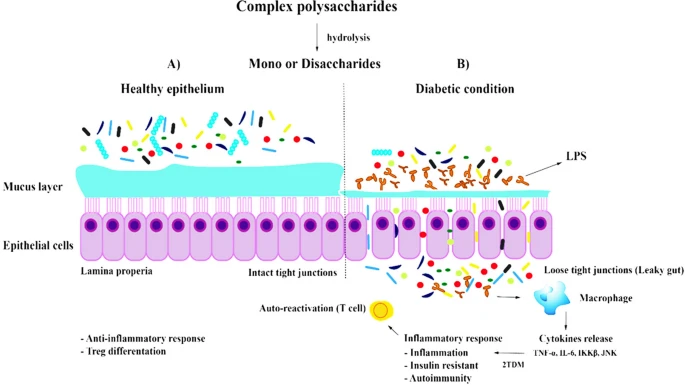
regulation. Furthermore, the review examines how the 'leaky gut' phenomenon allows lipopolysaccharides (LPS) to trigger
chronic systemic inflammation, driving both insulin resistance and autoimmune responses. Specific attention is given to
therapeutic interventions; findings indicate that Fecal Microbiota Transplantation (FMT) can achieve up to 100% donor
engraftment when combined with lifestyle changes, significantly improving glycemic markers. The study concludes that
while animal models provide foundational insights, large-scale clinical trials are essential to transition toward personalized,
microbiome-targeted therapies in precision medicine.
Keywords :
Dysbiosis, SCFAs, FMT, Gut-Brain Axis.
References :
- Recent insights into the role of microbiome in the pathogenesis of obesity. Van der Vossen, E. W. J., et al. (2022). Recent insights into the role of microbiome in the pathogenesis of obesity. Therapeutic Advances in Gastroenterology, 15, 17562848221115320. DOI: https://doi.org/10.1177/17562848221115320
- A review of the relationship between gut microbiome and obesity. Zsálig, D. (2023). A review of the relationship between gut microbiome and obesity. Applied Sciences, 13(1), 610. DOI: https://doi.org/10.3390/app13010610
- The gut microbiota pathway mechanisms of diabetes. Bajinka, O., Tan, Y., Darboe, A., Ighaede-Edwards, I. G., & Abdelhalim, K. A. (2023). The gut microbiota pathway mechanisms of diabetes. AMB Express, 13, 16. DOI: https://doi.org/10.1186/s13568-023-01520-3
- The microbiota–gut–brain axis and diabetic cognitive impairment: A memorable journey. Rai, S., Souparnika, S., Devang, N., & Alva, P. (2023). The microbiota–gut–brain axis and diabetic cognitive impairment: A memorable journey. Clinical Diabetology. DOI: https://doi.org/10.5603/DK.a2023.0025
- Microbial dysbiosis in the gut drives systemic autoimmune diseases. Mousa, W. K., Chehadeh, F., & Husband, S. (2022). Microbial dysbiosis in the gut drives systemic autoimmune diseases. Frontiers in Immunology, 13, 906258 DOI: https://doi.org/10.3389/fimmu.2022.906258
- The role of fecal microbiota transplantation in diabetes. Vassallo, G. A. (2025). The role of fecal microbiota transplantation in diabetes. Acta Diabetologica. DOI: https://doi.org/10.1007/s00592-025-02508-0
- Introduction to the Human Gut Microbiota Thursby, E., & Juge, N. (2017). Introduction to the human gut microbiota. Biochemical Journal, 474(11), 1823–1836. DOI: https://doi.org/10.1042/BCJ20160510
- Al-Mansoori, L., Al-Jaber, H., & Al-Thani, A. (2025). TNF-α/NF-κB mediated upregulation of Dectin-1 in metabolic inflammation. Journal of Translational Medicine, 23(1), 630-639.
- Bajinka, O., Tan, Y., Darboe, A., Ighaede-Edwards, I. G., & Abdelhalim, K. A. (2023). The gut microbiota pathway mechanisms of diabetes. AMB Express, 13, 16.
- Biorxiv. (2023). Insight into the gut virome in patients with multiple sclerosis. bioRxiv preprint.
- Bishehsari, F., Voigt, R. M., & Keshavarzian, A. (2020). Disrupted diurnal oscillation of gut-derived short chain fatty acids: A mechanism linking circadian misalignment to metabolic syndrome. Sleep Medicine, 72, 114-122.
- Cedernaes, J., Benedict, C., & Schiöth, H. B. (2016). Gut microbiota and glucometabolic alterations in response to recurrent partial sleep deprivation in normal-weight young individuals. Molecular Metabolism, 5(12), 1175-1186.
- Cell Press. (2025). Microbiota-produced immune regulatory bile acid metabolites prevent central nervous system autoimmunity. Cell Reports Medicine, 6(3), 100101.
- Chen, Y., Zhang, X., & Wang, L. (2025). Gut mycobiome in cardiometabolic disease progression. Frontiers in Microbiology, 16, 1659654.
- Cureus. (2025). Fecal Microbiota Transplantation as an Alternative Method in the Treatment of Obesity. Cureus, 17(1), e310028.
- Frontiers Media. (2026). Microbial transformation of secondary bile acids: Roles in gut microbial ecology and immune function with an emphasis on autoimmune disorders. Frontiers in Immunology, 17, 1769792.
- Gao, T., Sun, Y., & Wang, J. (2025). A systematic review of shift work and gut microbiota dysbiosis: Implications for metabolic syndrome. Nutrients, 17(17), 2894.
- Gao, T., Sun, Y., & Wang, J. (2025). Chrononutrition and energy balance: How meal timing and frequency interact with circadian rhythms to influence metabolic health. Nutrients, 17(13), 2135.
- Gut Microbiota for Health. (2019). The impact of industrialization on the gut microbiota: Major triggers and what we can do to improve health. Gut Microbiota for Health Hub.
- Harvard Medical School. (2021). The guts of our ancestors. Harvard Medical School News.
- Huang, W., & Li, C. (2024). Role of CARD9 in cell- and organ-specific immune responses in various infections. International Journal of Molecular Sciences, 25(5), 2598.
- Jayasinghe, T. N., & Williams, S. (2020). Gut mycobiomes are altered in people with type 2 diabetes. BMC Microbiology, 20(1), 345-353.
- Karim, A., & Roberts, J. (2024). Changes in the type 2 diabetes gut mycobiome associate with metabolic markers. mBio, 15(3), e00169-24.
- Liu, S., & Zhao, Y. (2026). Gut mycobiome in metabolic diseases: Mechanisms and clinical implication. Journal of Advanced Research, 58, 112-125.
- MDPI. (2020). The Microbiome as a Therapeutic Target for Multiple Sclerosis. Nutrients/Biomedicines, 8(3), 33.
- MDPI. (2023). Gut microbial-derived metabolites as immune modulators of T helper 17 and regulatory T cells. International Journal of Molecular Sciences, 24(2), 1806.
- MDPI. (2026). Gut Microbiota in Metabolic Syndrome: Differences in Microbial Signatures and Therapeutic Implications. Medicina, 62(8), 1435.
- Medical News Today. (2025). Global data show why gut microbiomes in industrialized regions look increasingly alike. News Medical Life Sciences.
- Meylan, F., et al. (2022). The gut virome in autoimmune diseases: Progress and prospects. Frontiers in Immunology, 13, 915234.
- Mousa, W. K., Chehadeh, F., & Husband, S. (2022). Microbial dysbiosis in the gut drives systemic autoimmune diseases. Frontiers in Immunology, 13, 906258.
- Nature Publishing Group. (2019). The ancestral and industrialized gut microbiota and implications for human health. Nature Reviews Microbiology, 17(8), 523–530.
- PMC. (2022). Human gut microbiome across different lifestyles. Frontiers in Cellular and Infection Microbiology, 12, 908726.
- PMC. (2022). The interplay of gut microbiota between donors and recipients determines the efficacy of fecal microbiota transplantation. npj Biofilms and Microbiomes, 8, 56.
- PMC. (2022). What are the consequences of the disappearing human microbiota? Current Opinion in Biotechnology, 73, 102554.
- PMC. (2024). Ethnic variations in metabolic syndrome components and their associations with the gut microbiome. Scientific Reports, 14, 6712.
- PMC. (2024). Impact of Disease-Modifying Therapies on Gut–Brain Axis in Multiple Sclerosis. International Journal of Molecular Sciences, 25(3), 10818907.
- PMC. (2024). Recipient microbiome-related features predicting metabolic outcomes after fecal microbiota transplantation. Nature Communications, 15, 3612.
- PMC. (2024). Restoring the multiple sclerosis associated imbalance of gut indole lactate corrects metabolic and inflammatory dysfunction. Nature Communications, 15, 9123.
- PMC. (2025). The role of gut microbiota in autoimmune disease progression and immune modulation. Frontiers in Microbiomes, 4, 1553243.
- PubMed. (2025). Gut microbiota-derived metabolites modulate Treg/Th17 balance: Novel therapeutic targets in autoimmune diseases. PubMed Central / Reference Reviews, 41, 41293163.
- PubMed Central. (2020). Bile acid metabolites control Th17 and Treg cell differentiation. Nature, 577(7790), 410–415.
- PubMed Central. (2022). A bacterial bile acid metabolite modulates Treg activity through the nuclear hormone receptor NR4A1. Cell Host & Microbe, 29(9), 1366–1377.
- Rai, S., Souparnika, S., Devang, N., & Alva, P. (2023). The microbiota–gut–brain axis and diabetic cognitive impairment: A memorable journey. Clinical Diabetology.
- ResearchGate. (2023). Effects of fecal microbiota transplantation in metabolic syndrome: A meta-analysis of randomized controlled trials. Diabetes Research and Clinical Practice, 202, 110795.
- ResearchGate. (2023). Insight into the gut virome in patients with multiple sclerosis. ResearchGate Repository.
- ResearchGate. (2026). Modulating the Gut Microbiome as a Therapeutic Approach in Multiple Sclerosis: Implications for Gut-Brain Interactions and Immune Pathways. ResearchGate Narrative Review.
- ResearchGate. (2026). The gut–myelin axis: Microbial metabolites in oligodendrocyte biology and remyelination. Preprints, 202602, 1855.
- Saplontai, M., & Shibata, S. (2025). Understanding the interplay between circadian rhythms and nutrient timing: Implications for type 2 diabetes pathobiology. Journal of Biological Rhythms and Chrononutrition, 14(2), 145-158.
- Teo, S. M., Inouye, M., & Johnstone, L. (2026). Gut microbiota-regulated glutathione metabolic rhythms govern host systemic and colonic inflammatory oscillations independently of the core molecular clock. Gut Microbes, 18(1), 2670048.
- Thursby, E., & Juge, N. (2017). Introduction to the human gut microbiota. Biochemical Journal, 474(11), 1823–1836.
- Turek, F. W., & Allada, R. (2019). The effect of circadian and sleep disruptions on obesity risk. Nature Reviews Endocrinology, 15(5), 257-268.
- Van der Vossen, E. W. J., et al. (2022). Recent insights into the role of microbiome in the pathogenesis of obesity. Therapeutic Advances in Gastroenterology, 15, 17562848221115320.
- Vassallo, G. A. (2025). The role of fecal microbiota transplantation in diabetes. Acta Diabetologica.
- Velasco, M., & Garcia, L. (2024). Chrononutrition in type 2 diabetes mellitus and obesity: A narrative review of meal synchronization. Nutrición Hospitalaria, 41(1), 88-97.
- Voigt, R. M., Forsyth, C. B., & Green, S. J. (2025). Shift work, gut dysbiosis, and circadian misalignment: Mechanistic links to obesity and metabolic tissue dysfunction. Chronobiology International, 42(3), 312-327.
- Wang, H., & Sun, J. (2023). Abnormal proliferation of gut mycobiota contributes to the aggravation of type 2 diabetes. Biomedicine & Pharmacotherapy, 162, 114639.
- Wang, L., & Zhao, Y. (2026). Circadian rhythms of gut microbiota modulate nocturnal blood glucose control and insulin sensitivity in T2DM. Frontiers in Microbiology, 17, 1834999.
- Wang, Y., & Bass, J. (2026). Circadian rhythm disruption, sleep disorders, and their role in obesity-linked diabetes: Impacts on cellular and mitochondrial handling. Journal of Clinical Investigation, 136(4), e40124.
- Wiley Online Library. (2025). The role of gut microbiota‐derived metabolites in neurological disorders. Neurology and Clinical Neuroscience, 13(2), 70001.
- WJGD. (2022). Fecal microbiota transplantation in the metabolic diseases: Progress and pitfalls. World Journal of Gastroenterology, 28(23), 2546–2558.
- Zalman, R., Clock, O., & Gen, M. (2024). Interaction between early meals (big-breakfast diet), clock genes, and gut microbiota oscillation in the management of type 2 diabetes. International Journal of Molecular Sciences, 25(22), 12355.
- Zhang, Y., & Wu, X. (2025). The gut microbiome and diabetes pathobiology. Research Journal of Pharmacology and Pharmacodynamics, 17(4), 211-219.
- Zsálig, D. (2023). A review of the relationship between gut microbiome and obesity. Applied Sciences, 13(1), 610.
- Gut Microbiota and Metabolic Regulation Figure Title: Mechanisms by which the gut microbiota can influence host metabolism. URL: https://journals.sagepub.com/cms/10.1177/17562848221115320/asset/c039b47a-8c15-4fe6-8b6a-07e2c2b400f5/assets/images/large/10.1177_17562848221115320-fig1.jpg
- Variations in Diet, Microbiota, and Obesity Prevalence. Figure Title: Comparative Analysis of Dietary Patterns, Gut Microbiome Signatures, and Obesity Prevalence Across Ancestral, Industrialized, and Agricultural Populations. URL: https://pub.mdpi-res.com/img/table.png
- Gut Microbiota and T2DM Pathways Figure Title: Intestinal flora interrogating the mechanisms and pathways of Type 2 Diabetes Mellitus. URL: https://media.springernature.com/lw685/springer-static/image/art%3A10.1186%2Fs13568-023-01520-3/MediaObjects/13568_2023_1520_Fig1_HTML.png?as=webp
- Gut-Brain Axis and Metabolic Dysfunction Figure Title: Gut Dysbiosis and “Leaky Gut” Resulting in Alteration in Glucose Metabolism and Cognitive Impairment. URL:https://journals.viamedica.pl/clinical_diabetology/article/viewFile/94387/73384/398044
- Role of Microbial SCFAs Figure Title: Role of Gut Microbial Metabolite — Short-Chain Fatty Acids (SCFAs). URL:https://journals.viamedica.pl/clinical_diabetology/article/viewFile/94387/73384/398045
- Gut-Brain Axis and Metabolic Dysfunction Figure Title: Gut Dysbiosis and “Leaky Gut” Resulting in Alteration in Glucose Metabolism and Cognitive Impairment. URL: https://ars.els-cdn.com/content/image/1-s2.0-S1756464623005157-gr1.jpg
- Microbial Regulation of Glucose Homeostasis Figure Title:The integral role of the balanced gut microbes in maintaining glucose level and suppressing hyperglycemia. URL: https://images-provider.frontiersin.org/api/ipx/w=480&f=webp/https://www.frontiersin.org/files/Articles/906258/fimmu-13-906258-HTML/image_m/fimmu-13-906258-g001.jpg
- Gut-Brain T-Cell Signaling in MS Figure Title: Mechanistic T-Cell Differentiation and Migration in the Multiple Sclerosis Gut-Brain Axis. URL: https://images-provider.frontiersin.org/api/ipx/w=480&f=webp/https://www.frontiersin.org/files/Articles/906258/fimmu-13-906258-HTML/image_m/fimmu-13-906258-g003.jpg
- Role of Prevotella in RA Mediation Figure Title: The influence of Prevotella species in preventing or mediating RA. URL: https://images-provider.frontiersin.org/api/ipx/w=480&f=webp/https://www.frontiersin.org/files/Articles/906258/fimmu-13-906258-HTML/image_m/fimmu-13-906258-g003.jpg
The human microbiome, a complex of microorganisms outnumbering human cells by approximately ten to one,
serves as a critical regulator of systemic health. This paper investigates the intricate relationship between microbial dysbiosis
and the pathogenesis of obesity, type 2 diabetes (T2DM), and autoimmune disorders. By synthesizing recent metagenomic
data and clinical findings, this review explores how the loss of microbial diversity and alterations in the
Firmicutes/Bacteroidetes ratio contribute to increased energy harvest and metabolic inflammation. Key results highlight the
role of short-chain fatty acids (SCFAs), such as butyrate and propionate, in modulating insulin sensitivity and appetite
regulation. Furthermore, the review examines how the 'leaky gut' phenomenon allows lipopolysaccharides (LPS) to trigger
chronic systemic inflammation, driving both insulin resistance and autoimmune responses. Specific attention is given to
therapeutic interventions; findings indicate that Fecal Microbiota Transplantation (FMT) can achieve up to 100% donor
engraftment when combined with lifestyle changes, significantly improving glycemic markers. The study concludes that
while animal models provide foundational insights, large-scale clinical trials are essential to transition toward personalized,
microbiome-targeted therapies in precision medicine.
Keywords :
Dysbiosis, SCFAs, FMT, Gut-Brain Axis.